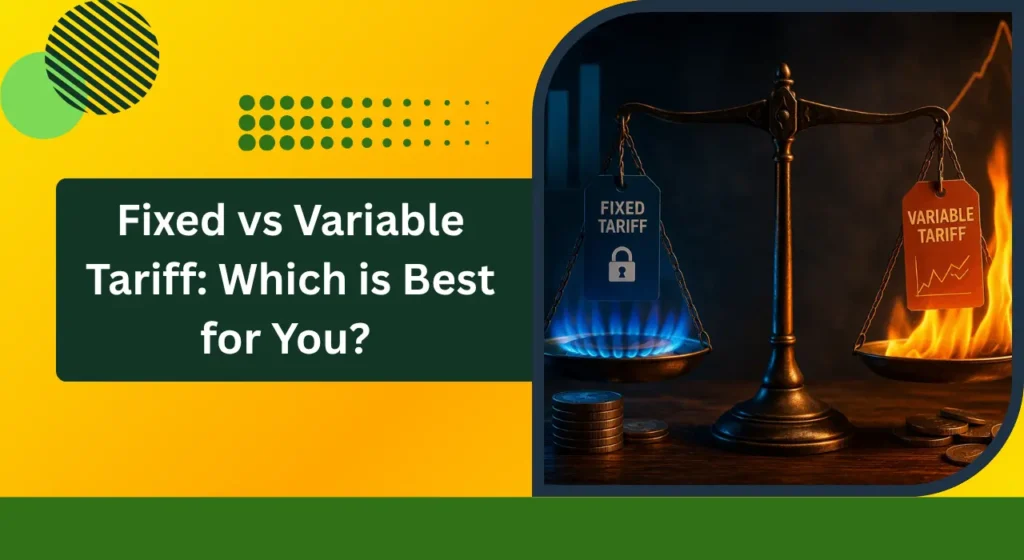

Choosing between a fixed vs variable tariff UK can significantly impact your energy bills and long-term costs. Energy costs are one of the biggest expenses for both businesses and households in the UK, and selecting the right tariff can make a major difference to your monthly budget. Fixed and variable tariffs are the two most common options, each with its own benefits, risks, and ideal usage scenarios.
Understanding how these tariffs work, along with their advantages and disadvantages, can help you make smarter decisions, reduce energy costs, and choose the best plan for your needs.
What is an Energy Tariff?
An energy tariff is simply the pricing plan you agree to with your energy supplier for the gas and electricity you use. It dictates how much you pay per unit of energy (measured in kilowatt-hours, or kWh) and the daily standing charge, which covers the cost of maintaining your connection to the grid.
When conducting a tariff comparison UK residents and business owners will notice dozens of different plans. However, almost all of these plans fall into two main categories: fixed and variable. The core difference lies in how the unit price behaves over the duration of your contract.
Fixed Tariff
A fixed tariff offers predictability. It is a highly popular choice for those who want to know exactly how much they will pay for the energy they consume.
How a Fixed Tariff Works
When you sign up for a fixed tariff, the supplier guarantees that the price you pay per unit of energy (and the daily standing charge) will not change for the duration of your contract. These contracts typically last for 12, 24, or sometimes 36 months.
It is important to understand that a fixed tariff does not mean your final bill will be the exact same amount every month. Your total bill still depends on how much energy you use. If you use the heating more during the winter, your bill will go up. However, the rate you are charged for each unit of that energy remains completely unchanged.
Domestic Example: A family of four signs a 12-month fixed domestic energy tariff in September. Even if global energy prices spike in January, their unit rate stays exactly the same, protecting their winter budget.
Advantages of a Fixed Tariff
- Predictability: You can accurately forecast your energy costs based on your usage, making budgeting much easier.
- Protection against price hikes: If wholesale energy prices rise significantly, your rates are shielded from the increase.
- Peace of mind: You do not need to constantly monitor the energy market to avoid sudden bill shocks.
Disadvantages of a Fixed Tariff
- Exit fees: Leaving a fixed contract early usually incurs a cancellation fee.
- Missing out on price drops: If the wholesale cost of energy falls, you are stuck paying your higher fixed rate until the contract ends.
- Usually higher initial rates: Suppliers often price fixed tariffs slightly higher than current market rates to account for future market volatility.
Variable Tariff
A variable tariff offers flexibility and closely follows the actual cost of energy in the wholesale market.
How a Variable Tariff Works
On a variable tariff, the price you pay per unit of energy can go up or down depending on the wholesale energy market. Your supplier can change your unit rates at their discretion, though they are usually required to give you advanced notice before an increase takes effect.
For domestic users in the UK, variable tariffs are often subject to a price cap set by the regulator (Ofgem), which limits the maximum amount a supplier can charge per unit. Business energy tariffs, however, do not typically have this price cap protection.
Business Example: A small retail shop opts for a variable business energy tariff. Over the spring and summer, wholesale energy prices drop due to an excess of renewable energy on the grid. The shop’s supplier lowers their variable rate, resulting in a significantly cheaper monthly bill compared to a fixed plan.
Advantages of a Variable Tariff
- Flexibility: Variable tariffs generally do not have exit fees, allowing you to switch suppliers or plans at any time without penalty.
- Benefit from price drops: If wholesale energy costs fall, your supplier may reduce your unit rate, saving you money.
- No lock-in periods: You are not tied to a long-term contract, which is ideal if you are moving premises or homes soon.
Disadvantages of a Variable Tariff
- Price uncertainty: Your unit rate can increase, making it difficult to budget for future energy costs.
- Risk of market spikes: If global energy markets experience a crisis, your bills can rise quickly and sharply.
- Requires monitoring: To ensure you are getting a good deal, you need to keep a closer eye on market trends and your supplier’s rate changes.
Fixed vs Variable Tariff: Head-to-Head Comparison
To make the best choice, it helps to compare these two options across a few critical categories.
Price Stability vs Flexibility
Fixed tariffs win heavily on price stability. You lock in a rate and forget about it. Variable tariffs win on flexibility. You can switch away at a moment’s notice if you find a better deal elsewhere or if your current supplier raises their prices too high.
Contract Length and Exit Fees
Fixed contracts bind you to a supplier for a set period (usually one to three years). If you break the contract early, you will likely face an exit fee, which can be substantial for large businesses. Variable tariffs operate on a rolling basis without fixed end dates or expensive exit penalties.
Impact of Market Prices on Bills
Market prices directly dictate a variable tariff. If the market goes up, your bills go up; if it goes down, your bills go down. A fixed tariff acts as a shield against market volatility. You will not feel the impact of a rising market, but you also will not reap the rewards of a falling one.
Cost Predictability and Risk
For strict energy cost management, predictability is key. Fixed tariffs carry low risk because your rates are guaranteed. Variable tariffs carry higher risk due to potential price surges, but they offer the reward of potentially lower costs during market downturns.
Key Factors to Consider When Choosing a Tariff
When deciding between a fixed and variable plan, consider the following elements:
- Current market trends: Are wholesale prices at a historic high, or are they unusually low? Locking in a fixed rate during a market peak might trap you into paying inflated prices.
- Your financial safety net: Can your household or business absorb a sudden 20% increase in energy costs? If not, a fixed plan is safer.
- Future plans: Are you planning to move house or relocate your business within the next year? A variable tariff avoids early exit fees.
Which Tariff is Best for Businesses?
For most companies, a fixed business energy tariff is the superior choice. Businesses rely heavily on accurate forecasting and cash flow management. Knowing exactly what your energy unit rate will be for the next 12 to 24 months allows you to set budgets and price your products or services accordingly.
Large manufacturing plants with high energy consumption might use a flexible purchasing contract (a complex form of variable tariff) to buy energy in blocks, but for small to medium-sized enterprises, the protection of a fixed rate is usually the safest route.
Which Tariff is Best for Domestic Users?
The best domestic energy tariff depends largely on the current economic climate and personal preference. If you value budgeting and peace of mind above all else, a fixed tariff is ideal. It protects your household from sudden winter price hikes.
However, if market prices are currently dropping and you want to benefit from those lower rates without being locked into a contract, a variable tariff might be better. Many domestic users utilize variable tariffs to wait for a favorable fixed deal to appear on the market.
Common Problems When Choosing a Tariff
Many consumers face pitfalls when selecting an energy plan. One common mistake is assuming a fixed bill means a fixed monthly cost, leading to confusion when winter usage drives the total price up.
Another frequent issue is ignoring the standing charge. Sometimes a supplier will offer an incredibly low unit rate but compensate with a very high daily standing charge. Always look at the total estimated annual cost, not just the unit rate. Finally, failing to calendar the end date of a fixed contract often leads to customers being automatically rolled onto their supplier’s expensive default variable tariff.
Tips to Make the Most of Your Tariff
- Read the fine print: Always check the exit fees on a fixed contract before signing.
- Monitor your usage: Submit regular meter readings or install a smart meter to ensure you are only billed for what you actually use.
- Set a reminder: Put a note in your calendar 30 to 60 days before your fixed contract ends so you can start looking for a new deal.
- Compare the whole market: Use a reliable platform for a tariff comparison UK-wide to ensure you see options from both large suppliers and smaller, independent providers.
Conclusion
Deciding between a fixed vs variable tariff ultimately comes down to your tolerance for risk and your need for price stability. A fixed tariff offers an excellent shield against rising energy costs and makes budgeting straightforward, making it highly attractive for businesses and families alike. Meanwhile, a variable tariff provides the flexibility to switch suppliers without penalty and the chance to capitalize on falling market prices. By carefully assessing your energy habits, financial situation, and current market conditions, you can confidently select the tariff that best supports your energy cost management goals.
FAQs
Here are some frequently asked questions about fixed and variable energy tariffs to help you better understand your options and make the right choice for your home or business.
What happens when my fixed tariff ends?
If you do not proactively choose a new plan or switch suppliers before your fixed contract expires, your supplier will automatically move you onto their standard variable tariff. This default rate is typically much more expensive than a fixed plan.
Can a supplier change my fixed rate?
No, the unit rate and standing charge on a fixed tariff cannot be changed by the supplier during the contract period. The only time your bill amount changes is due to fluctuations in your actual energy usage or changes to government taxation (like VAT).
Is it difficult to switch from a variable to a fixed tariff?
Switching is usually very easy. Because variable tariffs generally do not have exit fees, you can switch to a fixed tariff with your current supplier or a completely new supplier at any time.
Are business energy tariffs regulated the same way as domestic ones?
No. Business energy tariffs do not benefit from the Ofgem price cap, and they rarely offer a cooling-off period after signing. Therefore, businesses must be extra careful when locking into a contract.