
Are your business energy bills getting out of control? You are not alone. With rising costs across the UK, many business owners are struggling to keep expenses under control.
In this guide, we break down the average business gas prices UK, including kWh rates, typical costs, and practical ways to save money on your energy bills.
What Are the Average Business Gas Prices in the UK?
Business gas rates change regularly based on wholesale market costs. Unlike domestic energy, commercial gas prices in the UK are heavily customized based on your specific business profile.
Suppliers look at how much gas you use, where your business is located, and what kind of meter you have. Because of this, two similar businesses might pay different rates. However, we can look at the market averages to give you a clear benchmark.
Average Gas Price per kWh
The unit rate is the amount you pay for the actual gas you consume. Currently, business gas prices per kWh UK sit between 6.5p and 9.5p.
This rate varies depending on the size of your contract. Businesses that use massive amounts of energy usually secure lower unit rates because they buy in bulk. Smaller businesses often pay a slightly higher price per kWh.
Typical Monthly Business Gas Costs
Your monthly bill depends entirely on your energy consumption. A small office might only run the heating a few hours a day. A large restaurant uses gas constantly for cooking and hot water.
On average, a micro-business might spend around £80 to £150 per month on gas. A medium-sized retail store could see bills ranging from £300 to £600 monthly. Heavy industrial users often face monthly costs well into the thousands.
Average Business Gas Prices by Business Size
Suppliers categorize businesses into different bands based on their annual energy consumption. Understanding your band helps you know if you are getting a fair deal.
The more gas you use, the more negotiating power you have. Let us look at how UK gas rates for businesses change based on company size.
Small Business Gas Costs
Small businesses generally consume between 10,000 and 25,000 kWh of gas per year. These businesses typically operate out of small offices, independent shops, or local cafes.
For these users, the average unit rate is around 7.5p to 9.5p per kWh. The standing charge usually ranges from 35p to 60p per day. This brings the average annual gas bill for a small business to roughly £1,000 to £2,500.
Large Business Gas Costs
Large businesses use upwards of 50,000 kWh of gas annually. This category includes factories, large hotels, and corporate office buildings.
Because of their high consumption, large businesses can negotiate lower unit rates. They often pay between 6.0p and 7.5p per kWh. However, their daily standing charges are much higher, sometimes reaching £1.50 to £3.00 per day. Their total annual bills easily exceed £5,000.
| Business Size | Annual Gas Usage (kWh) | Unit Rate (per kWh) | Standing Charge (per day) | Estimated Annual Cost |
| Small Business | 10,000 – 25,000 kWh | 7.5p – 9.5p | 35p – 60p | £1,000 – £2,500 |
| Large Business | 50,000+ kWh | 6.0p – 7.5p | £1.50 – £3.00 | £5,000+ |
How Business Gas Prices Are Calculated
Understanding your gas bill can feel confusing. Suppliers break down your total cost into two main parts. Knowing how these two parts work is the first step to reducing your energy expenses.
You can also explore how business gas contracts work in the UK to better understand pricing structures. Here is exactly what you are paying for.
Unit Rate (Price per kWh)
The unit rate is the cost of the actual gas you use to heat your premises or run your equipment. It is measured in kilowatt-hours (kWh).
If you lower your heating or use more efficient appliances, you consume fewer kilowatt-hours. This directly reduces the unit rate portion of your bill. It is the part of the bill you have the most control over.
Standing Charges Explained
The standing charge is a fixed daily fee. You pay this fee even if you do not use a single unit of gas on a given day.
This fee covers the cost of maintaining the national gas network, keeping your meter connected, and servicing your account. Standing charges vary widely between suppliers, so it is crucial to check this fee when comparing quotes.
Factors Affecting Average Business Gas Prices UK
Many different variables influence the final price a supplier offers you. You cannot control all of them, but knowing what they are helps you understand your quote.
Here are the four main factors that dictate your commercial energy rates.
Business size and consumption
As mentioned earlier, your annual consumption is the biggest factor. Suppliers reward high-volume users with cheaper unit rates.
If your business grows and your energy usage increases, you should notify your supplier. You might qualify for a better tariff band when you renew your contract.
Location
Where your business is located impacts your energy costs. The UK is divided into different energy regions.
It costs suppliers more to transport gas to certain remote areas than to central hubs. Because of these transportation costs, businesses in different regions pay different unit rates and standing charges.
Contract type
The type of contract you choose heavily impacts your rates. A long-term fixed contract might have a different pricing structure than a short-term rolling contract.
Businesses on out-of-contract rates always pay the highest prices. This happens when you let a contract expire without signing a new one. Always agree to a new contract before your old one ends.
Market conditions
Global events directly impact wholesale gas prices. Shortages, weather extremes, and political events can cause prices to spike overnight.
Suppliers pass these wholesale costs onto consumers. If the global market is unstable, you will see higher quotes when you try to renew your business gas contract.
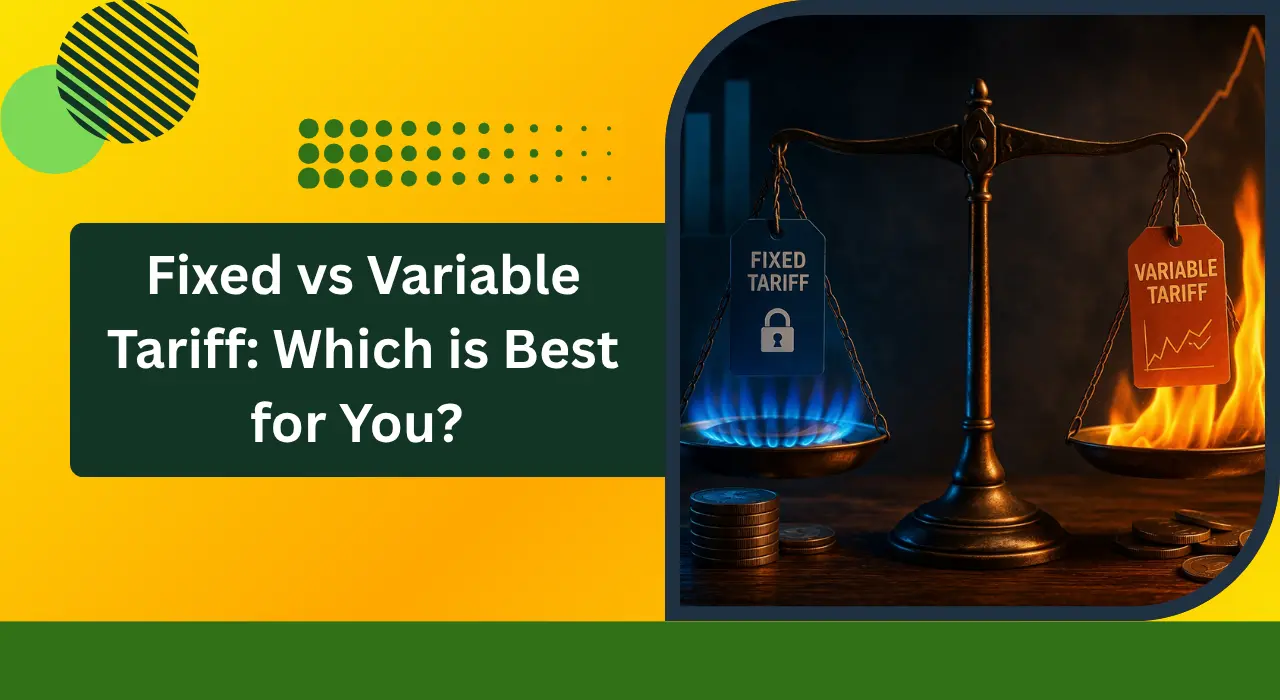
Fixed vs Variable Business Gas Prices
When you set up a new energy contract, you usually have to choose between a fixed rate and a variable rate. Both options have pros and cons.
Your choice depends on your budget flexibility and how much risk you are willing to take.
Fixed Rate Contracts
A fixed-rate contract locks in your unit price and standing charge for a set period. This period is usually between one and three years.
This means your price per kWh will not change, even if wholesale gas prices skyrocket. It offers great peace of mind and makes budgeting very easy. Most UK businesses prefer fixed-rate contracts for this stability.
Variable Rate Contracts
With a variable-rate contract, your unit price moves up and down based on the wholesale market. If global gas prices drop, your bills go down.
However, if market prices rise, your costs will increase immediately. This option is riskier but can save you money if energy prices are generally trending downward.
Average Business Gas Standing Charges
Standing charges have increased across the UK in recent years. This daily fee is a major frustration for many business owners.
Currently, the average standing charge for a small business is around 45p per day. For medium businesses, it sits closer to 80p per day. Large industrial users can pay several pounds a day just to stay connected to the grid.
Some suppliers offer zero-standing-charge tariffs. However, these tariffs always come with a much higher unit rate. They are usually only beneficial for businesses that use hardly any gas at all.
Why Business Gas Prices Change Frequently
Wholesale energy markets are highly sensitive. Gas is a globally traded commodity, and the UK relies heavily on imports to meet its energy demands.
According to official data from Ofgem, energy prices in the UK are heavily influenced by global supply and demand.
When demand is high—like during a particularly cold winter—prices go up. Supply chain issues, maintenance on gas pipelines, or international conflicts also cause prices to fluctuate. Because business contracts are closely tied to these wholesale markets, the quotes you receive can change daily.
How to Get Cheaper Business Gas Prices
You do not have to settle for expensive energy bills. Taking a proactive approach can save your business hundreds or even thousands of pounds a year.
Here are the three best ways to lower your commercial gas prices in the UK.
Compare suppliers
Never accept the first renewal quote your current supplier offers you. It is rarely their best price.
Use an energy broker or a comparison website to check rates from multiple suppliers. Comparing the market forces suppliers to compete for your business, securing you a much better deal.
Switch at the right time
Timing is everything when it comes to business energy. You can usually start comparing quotes and lock in a new rate up to six months before your current contract ends.
If market prices look favorable, lock in a deal early. Never wait until your contract has already expired, or you will be placed on expensive out-of-contract rates.
Improve energy efficiency
The cheapest gas is the gas you do not use. Upgrading your building’s insulation can drastically reduce your heating needs.
Service your boiler regularly so it runs efficiently. Install smart thermostats to ensure the heating is only on during business hours. Small changes in habits can lead to massive reductions in your kilowatt-hour consumption.
Business Gas Prices vs Electricity Costs
Many business owners wonder why their gas bills look so different from their electricity bills. Gas is generally much cheaper per unit than electricity.
Currently, business electricity unit rates are often three to four times higher than business gas rates. However, gas standing charges can sometimes be higher, depending on the supplier and the meter type. If you use both fuels, comparing dual-fuel contracts can sometimes simplify your billing, though separate contracts often yield cheaper individual rates.
Future Trends in UK Business Gas Prices
Looking ahead to the rest of 2026, the energy market is expected to remain somewhat volatile. While we have moved past the extreme peaks of recent years, wholesale prices are still sensitive to global events.
For a deeper understanding, check our breakdown of the UK business gas market.
Experts suggest that prices will slowly stabilize, but they are unlikely to return to the historic lows seen a decade ago. Businesses should focus on securing favorable fixed contracts and investing in energy efficiency to protect themselves from future price spikes.
Make Smart Choices About Your Business Energy
Managing your utility costs does not have to be a nightmare. By understanding the average business gas prices in the UK, you can spot a bad deal and negotiate a better one.
Always remember to compare suppliers before your current contract ends. Focus on reducing your daily consumption by making your premises more energy-efficient. Taking these simple steps will protect your bottom line and keep your business running smoothly.
FAQs
Here are some frequently asked questions about Average Business Gas Prices UK to help you better understand costs and pricing.
What are the average business gas prices in the UK right now?
Currently, the average business gas unit rate ranges from 6.5p to 9.5p per kWh. This depends heavily on your business size and location.
Can I cancel my business gas contract early?
Unlike domestic contracts, business energy contracts are legally binding for the full term. You usually cannot cancel early unless you are moving out of the premises.
What happens if my contract expires?
If you do not agree to a new deal, your supplier will move you to out-of-contract rates. These are the most expensive rates available, so always renew on time.
How do I find the best commercial gas prices in the UK?
The best way to find cheap rates is to compare quotes from multiple suppliers. Using a business energy broker can help you find deals not available to the general public.
Should I choose a fixed or variable tariff?
A fixed tariff is best for budget certainty and protecting against price hikes. A variable tariff is riskier but allows you to benefit if wholesale prices drop.