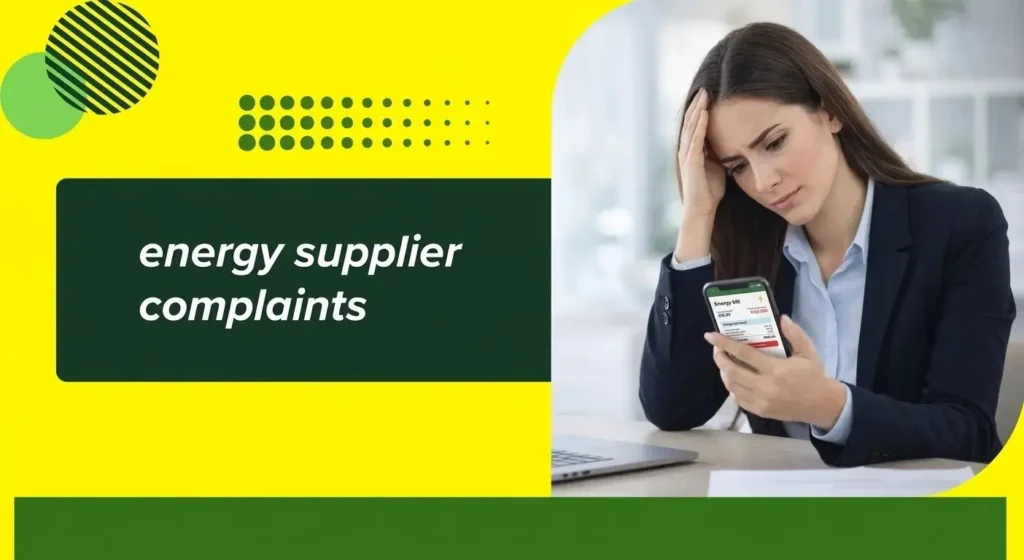

Opening your utility bill to find an outrageously high, completely unjustified charge can trigger instant panic and frustration. You should never have to fight tooth and nail just to get basic fairness from your utility provider when things go wrong.
Navigating energy supplier complaints does not have to be a stressful battle if you know exactly which levers to pull. This guide reveals the exact steps to protect your consumer rights, dispute errors, and force a fair resolution quickly.
What Are the Most Common Reasons for Energy Supplier Complaints?
Gas and electricity complaints usually stem from administrative errors that directly impact your wallet. Understanding the root cause of your issue is the critical first step in the dispute resolution process.
One major issue involves incorrect energy bill calculations that leave customers overcharged. These billing disputes often happen because the supplier relies on estimated usage rather than actual data.
Meter reading disputes are another frequent trigger for consumer frustration. If your smart meter loses connection, the supplier might guess your usage, leading to massive disagreement.
Customers also frequently experience direct debit issues where monthly payments are drastically increased without warning. This happens even when your overall energy consumption has remained perfectly stable.
Finally, poor customer service and delayed responses heavily contribute to gas and electricity supplier issues. Being passed between different departments while trying to fix tariff rates makes a bad situation much worse.
How to Make Energy Supplier Complaints Step-by-Step
Filing formal energy supplier complaints requires a methodical approach to ensure your provider actually listens. Follow these exact steps to build an airtight case against your utility company.
Step 1: Gather Your Evidence
Before contacting anyone, collect every relevant document proving your case. This includes recent bills, bank statements, and a photographic record of your meter. Having concrete proof stops customer service representatives from dismissing your claim.
Step 2: Contact Customer Support Directly
Reach out to your provider’s customer service team via phone or live chat for an initial discussion. Explain the problem clearly and ask for a specific timeline for when they will fix it. Always take note of the representative’s name and the exact time of your conversation.
Step 3: Submit a Formal Written Complaint
If the initial phone call fails, it is time to submit a formal written complaint. Send this via email or registered mail so you have a documented paper trail. Clearly state your account number, the nature of the issue, and the specific resolution you expect.
Step 4: Keep Following Up
Do not assume your provider is working on your case just because you sent an email. Set a reminder to follow up every week to keep the pressure on. Consistent follow-ups prevent your ticket from being quietly closed or ignored.
When Does the 8-Week Complaint Handling Timeline End?
The complaint handling timeline is a legally mandated window that dictates how fast providers must resolve issues. Once you submit your formal written complaint, a strict eight-week countdown immediately begins.
During these eight weeks, the supplier must investigate your claims, correct energy billing errors, and offer a resolution. They should provide regular updates on their progress to keep you informed.
If the eight weeks pass and your problem remains unsolved, you gain new rights. At this exact point, you can escalate the matter to an independent authority without the supplier’s permission.
Knowing this timeline prevents suppliers from trapping you in endless cycles of “we are looking into it.” It puts a hard expiration date on their delays.
What is a Deadlock Letter and When Should You Request It?
A deadlock letter is an official document from your provider stating that they cannot or will not resolve your issue. It essentially means that both parties have reached an impasse.
You should request this letter if the supplier offers a final resolution that you completely reject. You can also request it if negotiations have completely stalled before the eight-week mark.
This document is incredibly valuable for your complaint escalation strategy. It serves as a golden ticket, allowing you to bypass the rest of the waiting period.
Once you possess a deadlock letter, you can immediately take your case to external dispute resolution bodies. Never let a supplier refuse to issue one if negotiations have truly failed.
How Does the Energy Ombudsman Process Work?
The energy ombudsman process is a free, independent service designed to settle disputes between consumers and suppliers. They act as impartial referees when your provider fails to deliver a fair outcome.
To use their service, you must either have a deadlock letter or have waited the full eight weeks. You submit your evidence, timeline, and correspondence history through their online portal.
The ombudsman will then review both sides of the story, looking closely at consumer rights regulations. Their investigation typically takes a few weeks, depending on the complexity of your billing disputes.
If they rule in your favor, their decision is legally binding on the supplier. They can force the company to fix your account, issue an apology, and even pay you financial compensation.
How Do Business Energy Complaints Differ?
Business energy complaints operate under slightly different rules than standard residential disputes. Commercial contracts are often more complex, meaning the stakes are significantly higher.
One massive issue for companies is the dreaded contract rollover, where suppliers automatically renew agreements at exorbitant rates. Small business owners must track their renewal windows aggressively to avoid this trap.
Supplier complaint resolution for businesses still requires following the eight-week timeline and gathering extensive proof. However, only micro-businesses typically have access to the free ombudsman service.
Larger corporations may need to involve legal counsel or rely heavily on the energy regulator for severe breaches. Always verify your business classification before beginning the formal dispute resolution process.
Why Do Common Mistakes Derail Complaint Escalation?
Many consumers accidentally sabotage their own cases by making completely avoidable errors during the process. One major mistake is failing to keep a written record of phone calls and promises.
Another frequent error is stopping monthly payments out of pure frustration over an incorrect energy bill. Withholding payment can damage your credit score and give the supplier grounds to disconnect you.
People also rush the process, trying to contact the ombudsman before the eight weeks have passed. The ombudsman will simply reject your case and tell you to wait, wasting valuable time.
Finally, losing your temper with customer service staff rarely yields positive results. Keep your communications strictly professional, factual, and relentlessly persistent.
What Are the Best Prevention Tips to Avoid Issues?
The easiest way to handle supplier issues is to prevent them from happening in the first place. Taking proactive steps keeps your account perfectly accurate and reduces administrative friction.
First, always submit manual meter readings every single month, even if you have a smart meter. This completely eliminates the risk of estimated billing disputes.
Second, read every single letter and email your provider sends regarding your tariff rates. Catching a price hike or a contract end date early gives you time to switch providers.
Finally, monitor your bank account to ensure your direct debit matches your actual statements. Spotting an overcharge in the first month is much easier to fix than discovering a year of errors.
Frequently Asked Questions
Can I switch suppliers while a complaint is ongoing?
Yes, you are legally allowed to switch providers even if you have an active dispute. However, you must still resolve any outstanding valid debt with your old supplier.
Can I switch suppliers while a complaint is ongoing?
Yes, you are legally allowed to switch providers even if you have an active dispute. However, you must still resolve any outstanding valid debt with your old supplier.
Can I switch suppliers while a complaint is ongoing?
Yes, you are legally allowed to switch providers even if you have an active dispute. However, you must still resolve any outstanding valid debt with your old supplier.
Can I switch suppliers while a complaint is ongoing?
Yes, you are legally allowed to switch providers even if you have an active dispute. However, you must still resolve any outstanding valid debt with your old supplier.
Can I switch suppliers while a complaint is ongoing?
Yes, you are legally allowed to switch providers even if you have an active dispute. However, you must still resolve any outstanding valid debt with your old supplier.
Take Action and Resolve Your Disputes Today
Dealing with utility providers can feel like fighting an endless uphill battle, but you hold more power than you realize. By understanding your rights, documenting everything, and escalating properly, you can force companies to act fairly. Energy supplier complaints are entirely winnable when you follow the structured timeline and demand accountability.
Do not let massive corporations hold your hard-earned money hostage take your first step toward resolution today.